Content warning: psychological abuse of a child.
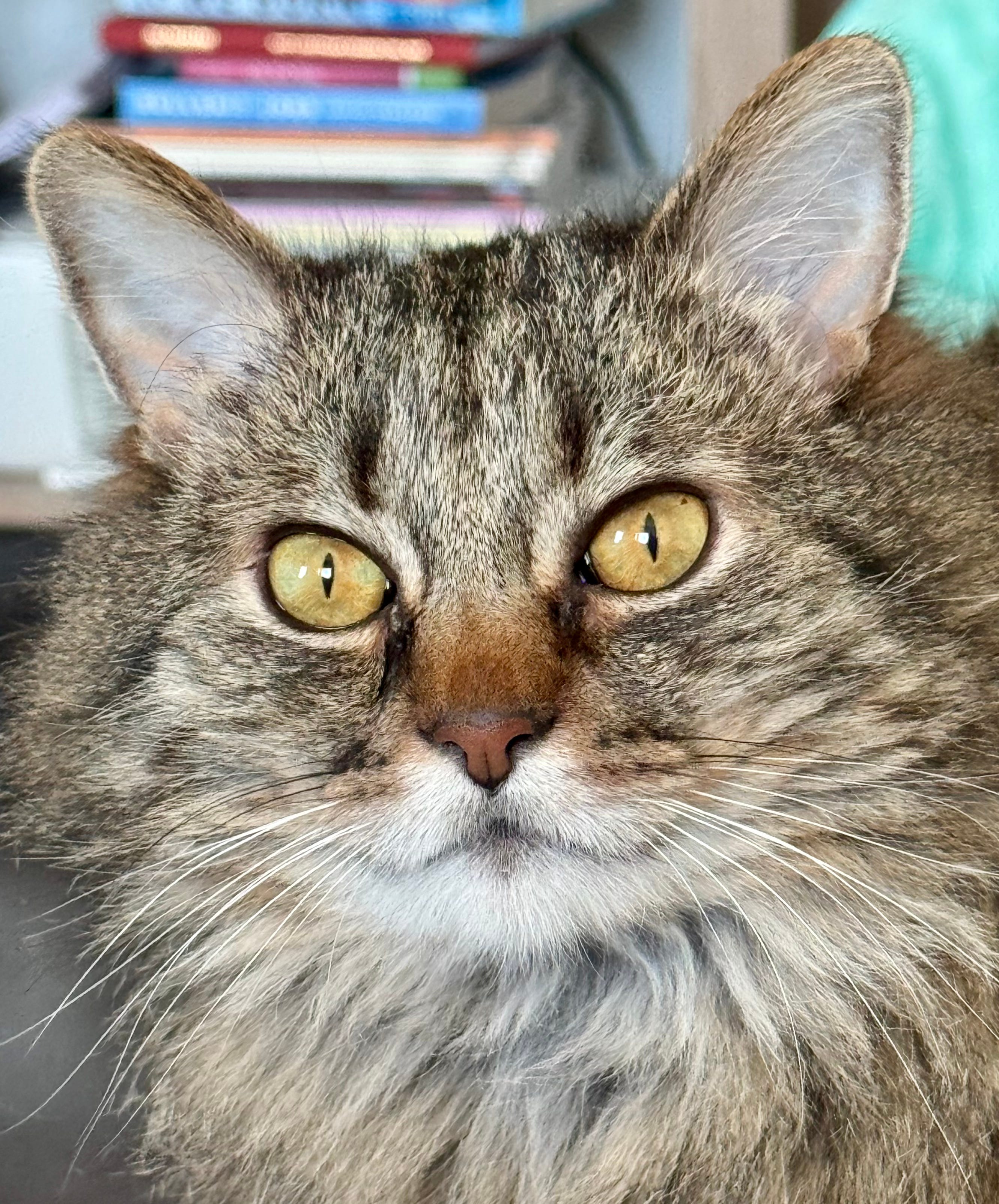
(Please stick it out if you can. There’s a victorious ending and a picture of a cat.)
Names and details have been changed.
Connahan was created for the little kids. Thousand Pines held the preteens.
It was 1996, and these two state-funded summer day camps served lower-income kids from my almost-city hometown: children of fathers working for the mysterious-clanging-smoking manufacturing plant that everyone called UV, short for Univolt.
UV was the spine of our neighborhood. I grew up on a street of houses built to shelter the first generation of plant employees back in the 1950s: low-profile, three-bedroom Craftsmans priced for a family man’s salary.
It was only men working back then: the call for women’s wartime factory assistance had ended, and the Baby Boom was in full swing. Even by the time I was growing up, most of the mothers in the neighborhood still stayed home with their kids.
There were exceptions, of course.
My best neighbor-friend Leah was the only child of a single working mother who was only in her late twenties, even though she seemed ancient and glamorous to me back then. They lived just two doors up the street and their house smelled like girls, not like my place with its cat pan and undiagnosed lactose farts.
Leah and I spent many fruitful hours on the swingset my dad built in my backyard, munching forbidden (to me) snacks and evaluating her mother’s boyfriends. We decided that Paul was the best so far, because he had moved a big rock out of Leah’s yard so we could play without breaking our ankles. Also, he wasn’t creepy like Dan. We were both glad when her mom ended things with him; he was a little too interested in hanging out with us. He called us beautiful in a way that sounded…different from our moms saying it.
The UV plant was built for function, not beauty. It started as a place to make car engine parts, but today it focuses more on military tech. I wouldn’t call it a welcoming place: my young memory shows it as a wash of graphite gray, smokestacks billowing between clouds.
When my dad ran machines on the plant floor back in the 80s and early 90s, he sometimes brought my older brother Joey and me to come see where he worked. He loved showing us off. He was the proudest dad.
He always held my hand while we climbed the terrifying metal-grate stairs up to the offices where nice ladies kept candy for me behind their desks. I always caught my breath and looked down through the grate when we got to the top landing, deliciously overwhelmed, and trusting that the loud all around me was about to turn into carpeted quiet.
It was worth the moments of fear to hang with my dad without my mom around: I got to see him happy and relaxed, and I didn’t have to bite my tongue while Mom said mean things. Once, he took me on a tour of the factory floor itself, but not before safeguarding my little ears with some neon-orange plugs that lived on a string around his neck. He wanted me to experience the world, but he also understood that I couldn’t deal with loud.
He got me.
During one of those tours, I decided that UV looked to me like the gates of Hell I had learned about in Sunday school earlier that week. I didn’t understand how my dad could go there into the loud every day. (Many years later, I’d learn the concept of “paying the bills.”)
Dad owned a heavy red toolbox filled with metal instruments, each carefully engraved with our last name in his blocky handwriting. He kept it at UV while he worked there, but once he moved to a desk job, it lived in his workshop at home. He used his high-pitched mini handheld drill to mark his territory each time he got a new tool before bringing it to work. (“THE DREMEL!” he would cry, brandishing it like a wizard’s staff to make me giggle.) I couldn’t bear the drill’s whine, but I stood there with my hands clamped over my ears so I could marvel at our name taking shape on the steel. Magic.
Dad kept baby pictures of Joey and me front-and-center inside the lid of his toolbox. He always made sure his tools were placed in the box in such a way that they wouldn’t mess up those pictures when he shut the lid. Even by the time I was mired in puberty and he had moved to a desk job upstairs, near the nice ladies who had candy, those pictures stayed, curling, in their place.
I was forever a baby to him.
He seemed soft to me as well, too gentle for the gloom and clatter of the machine shop. When he finally did find a better place to work, one that had big windows, colorful walls, quiet hallways…and that required our family to leave our hometown, I didn’t begrudge him the chance at happiness.
He had grown thin from work stress, and I wanted better for the only person in my family who understood me. His belly, once so big and round in the sun when we went to the lake, now drooped like a windless flag against his ribcage. I didn’t want my daddy to disappear.
We had so much fun hanging out in the summers when I was small. He threw endless baseballs for me to catch, assembled a bike for me and ran behind me holding it steady, and let me “help” him with his home improvement projects. He took me to the lake in the mornings and laughed when I made fun of him for having the hairiest back of any daddy in the entire state.
I had a blast, while it lasted. (Also, the joke’s on me, because I have his exact leg hair pattern now.)
The summer after I muddled through first grade, my mom decided that my brother and I needed to socialize more, so off I went to Connahan Day Camp each morning with the other little neighbor kids.
I was not consulted.
I wanted to keep hanging out with my dad and doing cool stuff together. I asked Dad privately, conspiratorially, if I really had to go. He quietly assured me that it would be fine in a tone that told me it wasn’t really up to him.
It’s kind of crazy how good I got at reading my parents. We really do learn the language we need to survive.
Camp was based at Connahan Elementary School, on the other side of town. That was the school I didn’t go to, the one that seemed like an alternate reality. They had all the same stuff there, just in different places. It seemed so strange to me, the same way it was weird going to a different Piggly Wiggly for groceries when we visited Dad’s parents on the farm where he grew up, the next state over.
“Why can’t the aisles be the same every store? Isn’t it harder to make everything just a little bit different?”
“Don’t worry about it, Lizzy.”
My older brother rode the big yellow bus up to our town’s field house, the one with the big arrow painted on the side, where he went to Thousand Pines Day Camp with the bigger kids. It was named for the steep grove of pine trees that grew almost up to the doors of the field house.
I spent a lot of time in those woods once I got old enough to go to Pines, myself. One of the staff’s go-to games was Camouflage, where they had us hide behind the giant trees and fallen logs in the woods while one counselor tried to spot us and call us back down the hill. (Just mind the ticks!)
Once, I found myself clustered like mushrooms with several other campers as we all squeezed for space behind a particularly wide-set tree trunk. A roving counselor patrolling the woods happened upon us. She admired how many kids we had managed to cramp together behind one tree. She kept her cool and didn’t blow our cover: with a tap to the bandana on her forehead, away she went into the woods. You never know when your allies might appear.
One person who didn’t feel much like my ally those days: my mom. It was never clear to me why she suddenly needed so much time to herself. Now that I’m around the age she was back then, I’m still not sure. I’ve learned not to go down the rabbit hole of trying to guess why she did the things she did. Some drawers are better left shut.
Regardless, I was informed that I wouldn’t be spending my summer days with my dad, my mom, or my brother moving forward. Off to camp with me! I panicked internally: “If I don’t have anyone from my family around to tell me what to do, how will I decide how to spend my time?”
I didn’t have to worry for long. My life at Connahan was similar to my days in public school. Activities were planned to please the normal kids: lots of shouting and competition, little time to think or process, no easy way to opt out. People like me who didn’t fit in found the best contortion we could and committed to dissociating.
Once, as a treat, we went as a camp to see The Hunchback of Notre Dame, the Disney version with that slinky Esmeralda who made me feel funny in my stirrup pants. I was eight when it came out, and I remember the throat-coating smell of popcorn butter as we thronged into the theater’s snack bar to load up on the 90s-era candy that still got made with the tasty trans fats that were outlawed later for stopping too many hearts. Snickers and Skittles truly don’t taste the same anymore.
It was strange, to be alive in a time when doctors were discovering that our beloved foods were actually filling morgues, and to be an undiagnosed autistic in a time when all my favorite treats were just slightly changing in taste and texture.
The facts felt mushy back then. The ground was sinking below my feet, and no one seemed to think it was bad except me.
But, back on that hot day in 1996, I handed over my mad money in exchange for the good stuff: a king-size Snickers bar, pre-trans-fat-ban, all for me, with no one around to tell me to save some for later or to show me their blown-out stretch marks as a warning.
Fuck. Yes.
That Snickers the size of my forearm brought temporary peace to my heart, which was lucky for me, because Disney movies have always been too cruel for my constitution. The scene that broke me in Hunchback was when the town ties Quasimodo to a big wheel and throws tomatoes at him. My little nervous system had too many tabs open by that point in the day: the chatter-clatter of campmates, the booming theater speakers, that damn throat-slicking popcorn butter, and not least of all the abuse on screen that other kids were laughing at.
My thoughts raced:
“Why doesn’t anyone feel bad for him? Why did they hurt him when he couldn’t fight back? Why is it so bad that he’s different? Should I hide the things that are different about me so people don’t hurt me?”
I wondered if people would just laugh if I shared what was happening at home that made me scared. The boys near me talked over the movie about how they wanted to marry Esme, but I didn’t hear any of the girls saying the same and I didn’t understand why. My seat was creaky and distracting. The kid next to me farted like he meant it. The one behind me was a seatback-kicker. I couldn’t manage all the input and I lost it.
I exploded into the kind of torrential widow-tears that only come after a sweeping loss of life. The head counselor, a high-testosterone dude with a full beard and backwards baseball cap who only showed up when things got serious, appeared out of nowhere and used one of those chunky new cell phones people were starting to carry to call my mother. (Was there actually someone paying attention after all?)
I was taken to the lobby by one of the kinder junior counselors and parked on a bench to wait for my ride home. Too much camp today. My mother arrived and played the concerned-parent role flawlessly for the waiting counselor, but once I was packed into the car, she let me know how disappointed she was that she lost her day.
“I was going to get so much done, and you seem fine now anyway, so maybe I could just drop you back at camp? The other campers are probably about to get out of the movie anyway, so I can just drive you back and let you rejoin the fun now that you aren’t crying, wouldn’t that be great for both of us? You really need to toughen up, anyway, and this will be a great chance to practice.”
She clicked the turn signal and the left arrow flashed in the dashboard.
I tried to speak in my defense, to tell her that I was only fine now that I was out of all the too-much, the too-loud, but my mouth felt glued like I had used one of my purple imitation Elmer’s sticks as lip balm. My jaw refused to move. My spine, growing in a strange curve we wouldn’t find until years later, stayed fused to the car seat.
She took my silence as consent.
“I’m not always going to be around to come rescue you, you know. You’re going to have to learn to be tough like I was when I was your age. I was a year younger than you when I took over the house, and I turned out just fine. You really have a great life, I don’t understand what you have to be unhappy about. Do you know that my father used to pick me up out of bed by the ankles when I slept in? He would have made you stay, but I’m a good mother so I came to get you. Never forget that I love you more than anything in the world.”
“I love you too, Mommy, thank you for coming to get me. I’m sorry, I love you, please don’t be mad.”
“Bunny Rabbit, I forgive you, and so does Jesus. Let’s say an Our Father together before I drop you off, how about that…don’t mumble, you used to speak so clearly when you were little, but now I can barely understand what you’re saying…I said speak up!”
“I’m sorry Mommy, is this better?”
“Don’t you raise your voice at me, young lady. I brought you into this world and I can take you back out again if I want to, no one would stop me. Jesus doesn’t like disrespectful little girls who sass their mothers.”
We turned into the oak-lined dropoff lane at Connahan. Another counselor approached the car, curious. My mother turned on the singsong charm and rolled down the window.
“Hi-i, she got a little scared at the movies, but she’s feeling better and she really wants to finish the day at camp!“
She turned to me and gave me a big hug, hand through my hair and everything.
“Sweetie, remember you’re my little Bunny Rabbit and I love you! I know you can be a big girl and finish the day. I’ll see you later for pickup.”
“I love you too, Mommy.”
I didn’t just struggle with the indoor activities at camp. I also failed at peeing outside in the woods! Smash cut to a couple weeks after movie day:
Tramping through the forest near the grounds with the rest of the group, I found myself bursting with store-brand Capri Sun from lunch. We were about a mile from the school at this point, heading for a joint bonfire night with the campers from Thousand Pines, nowhere near a toilet. I burned with embarrassment: how was I supposed to know what to do here? I wasn’t supposed to be an inconvenience to anyone, but I needed to pee too badly to be polite and stay quiet.
I summoned my courage and asked the nicest counselor I could find to take me to a bathroom. She smiled and encouraged me to find a quiet place behind a tree and go to town. I balked, but she was patient.
“It’s pretty far, sweetie, and we won’t have time to come out for the bonfire if we head back now.”
She seemed relaxed and her reasoning was sound, so I tried to follow her lead. Dubious, I wandered into the woods until I found a pine I could only halfway hug, it was so wide. Nobody anywhere to peek at me, either.
Perfect.
I dropped my cotton shorts and underwear, squatted, and promptly pissed all over the backs of my Ames-brand Keds. I had never had to aim before. Nothing to be done but crisis management at that point.
I grabbed my water bottle, a dark gray and blue Nalgene branded with the swirling UV logo, and poured water on my feet until I guessed the pee was gone. Hopefully the bonfire would help dry my kicks. Nature one, Lizzy zero.
Misplaced forest piss was a theme in my summer camp experiences. When I graduated from Connahan to Pines, I spent a lot of time banished to the hilly woods near the field house with the rest of the campers. This was in line with the current style of parenting, when we really were just left to fill the day more or less undisturbed in the summer. This freedom gave our counselors more time to complete their daily checklist of smoking weed, covertly fucking in the field house office, and generally neglecting to pay attention to us in any way. (I never actually witnessed the weed or the sex, but salacious rumors flew when the office door was found locked.)
Speaking of rumors and further pee, the counselors themselves fueled one among campers of a bad seed named Billy Joe who wandered the woods, claiming he would sneak into the campsite and piss in your water bottle if you weren’t careful. Billy Joe was the closest thing we had to a local cryptid: no one I knew had ever seen him, but if you believed the stories, he had destroyed an ice cream party planned for the campers just last year, simply because he had been kicked out of camp himself for being so bad. Anybody you asked at Pines could tell you a story about this kid, if he was even human enough to be called a kid. We all said his name just a notch quieter, like we might summon him straight from the forest: “Did you hear what they were saying about…Billy Joe?”
As a grown adult, I can see that he was just a boogeyman meant to make kids keep track of their stuff and not wander off into the woods. I do have to wonder if there was a better way to get that job done.
Pines was Sparta, and every day was an opportunity to get kicked backwards into a big hole. Because the camp was town-funded, it drew the lower-income kids like my brother and me whose parents needed a break but didn’t have the cash for the Boy Scouts or Girl Scouts, who I had heard would whisk you away for eight weeks at a time to a remote forest for cabin adventures like I’d only read about in library books. No such glamping getaways for Joey and me: we drew spiderwebs on our elbows at Pines and were instructed to be grateful.
I begged my mother to let me stay home from the echo-clang chaos of the cavernous metal field house where our camp was based. I often came back from activities to find my backpack tampered with by kids with home lives worse than mine. I learned to pack more snacks than I needed so I’d have some bargaining chips. My brother’s glasses once got stolen when he took them off to go swimming. The camp counselors never cared, so eventually I quit complaining and just guarded my stuff each day until it was time to head home.
It’s a mark of how undersupervised we were that no one ever questioned my stubborn daily seat on top of my little hard-top lunch cooler. Each morning, I settled in to read the book I had stuffed in my backpack earlier. I loved to travel somewhere else in the world for hours, peaceful in my stolen way. I let my focus narrow into the book, closing out everything around me once the rest of the campers left for outdoor activities and the coast was clear. I never had to guess when the day was over: I always knew it was time to head home when the joyful shouts of other kids once again reached for the high ceiling.
Reading was a good escape, but I still dreaded going to camp each day. I started to wake in the mornings with mysterious aches and pains in my joints; one day, I felt my ankle heat and stiffen as Mom’s car neared the field house. I asked her to please, please turn the car around and let me stay home. I couldn’t possibly do a day of camp with a messed-up ankle, right?
Wrong.
“I have a day to myself planned and I will be goddamned if I let you take it away from me. Your brother never has a problem with camp, does he? Why can’t you just be more like him? I never got to go to camp when I was a little girl, because I had to keep up the whole house, so aren’t you lucky that you get to just have fun and be a kid? Why do you have to make things so hard?”
I wondered why Joey made camp sound so nice when he described it to Mom. He got picked on too, so he eventually learned to fit in with the rough kids. He was the type to get talked into doing something stupid that the rest of the group wanted to see happen but were too smart to do themselves.
I didn’t have the words to tell Mom that what I needed more than anything was quiet, something my fellow campers couldn’t comprehend or allow. Playtime for everyone else meant yelling time, and all I wanted to do was curl up at home with my knitting and my cat.
I had asked my mom to teach me to knit a year before, after convincing my dad to buy me some knitting needles at one of the yard sales we went to together every weekend during the warmer months. Like any good pre-Y2K dad, mine was fine with buying sharp, rusty objects from strangers for his children, and I was thrilled about it.
It took some doing to learn how to knit: I observed Mom for a few days like an operative, scanning for moments of softness and relaxation. I chose my moment to approach: she lounged on the couch with her usual champagne-colored can of Caffeine Free Diet Coke. She was wrapped in an afghan, cuddling our obese orange cat. I held my breath and plucked my courage.
“Mommy, I want to be like you, will you show me how to knit? You don’t even have to get me anything, I already have needles and everything, it won’t cost you anything and we don’t have to go anywhere. Please?”
I had chosen my moment well: she felt praised, not put-upon. Mission accomplished.
I quickly picked up the basic skills from Mom and outpaced her ability by reading her old Vogue Knitting back issues. I learned not to work on complicated projects in front of her while I spent time watching TV in the living room, or she would make pointed comments about me not needing her anymore and wait for me to soothe her. Even when I was tenderly young, I knew I should never outshine the master.
So when I wasn’t watching minutes pass at Pines, I knitted acres of unchallenging afghans in garter stitch, attempting to ease Mom’s frazzled ego. Each row was a poem for her:
“I want to be just like you. You’ll always be the best, the smartest, the prettiest. I’ll need you forever but not ever when you’re tired. You’ll never be alone.”
Knitting helped me cope with my mother’s insistence that I spend more time with the family in the living room. The only thing we ever did together was TV, which I hated because I never got to pick what we watched. I learned later that some families went out to the movies, to museums, to concerts and to the homes of other families, even. Not us. We watched TV, and not just any TV.
We had a strict regimen of sitcoms, soap operas, and local news, all blaring. We always changed the channel when the local news was done and the national news came on: what happened in other countries was too worldly and beyond our control to watch.
Mom gave me a hard time for seeking too much quiet in my room, but I was way too overstimulated by family time for it to be something I could want. My retreat made sense, but my mom took it personally, so as a compromise, I quietly knitted and dissociated from my corner of the couch.
Each time I cast off, I presented my knitting to my mom as proudly as our other cat (ancient, ferocious, and black) gifted us mice she hunted from the backyard and dropped on the doorstep. Each time, Mom took in my finished afghan as if it came from someone else’s child, not as if it was her grand-creation. Each time, I assumed that she was doing an amazing job as a mother and that I just had to find a way to be a better kid. It wasn’t hard to make this leap, because she told me, regularly, what a great mom she was.
“If she’s so perfect, and the system isn’t working…then it has to be me.”
This is all to say that when I saw that hunchback tied to a wheel on a screen that reached from floor to ceiling, I wanted better for him and for myself. I felt like I was him. I should have laughed at the cartoon like the other kids, but something different happened. My empathy kicked online in a way that only ever felt like weakness until I eventually escaped to a kinder environment.
Empathy is what made me wonder why Billy Joe acted so bad in the first place. It’s what allowed me to read my inconstant mother like a book. It’s what told me to run for my life, and what convinces me to stay alive today.
If this piece moved you, please consider a donation to Friends of the Children, rated 98% on Charity Navigator.
After-bummer care: I take care of Leonard the Cat when his owners go out of town. He loves to give kisses and he’s a high soprano.